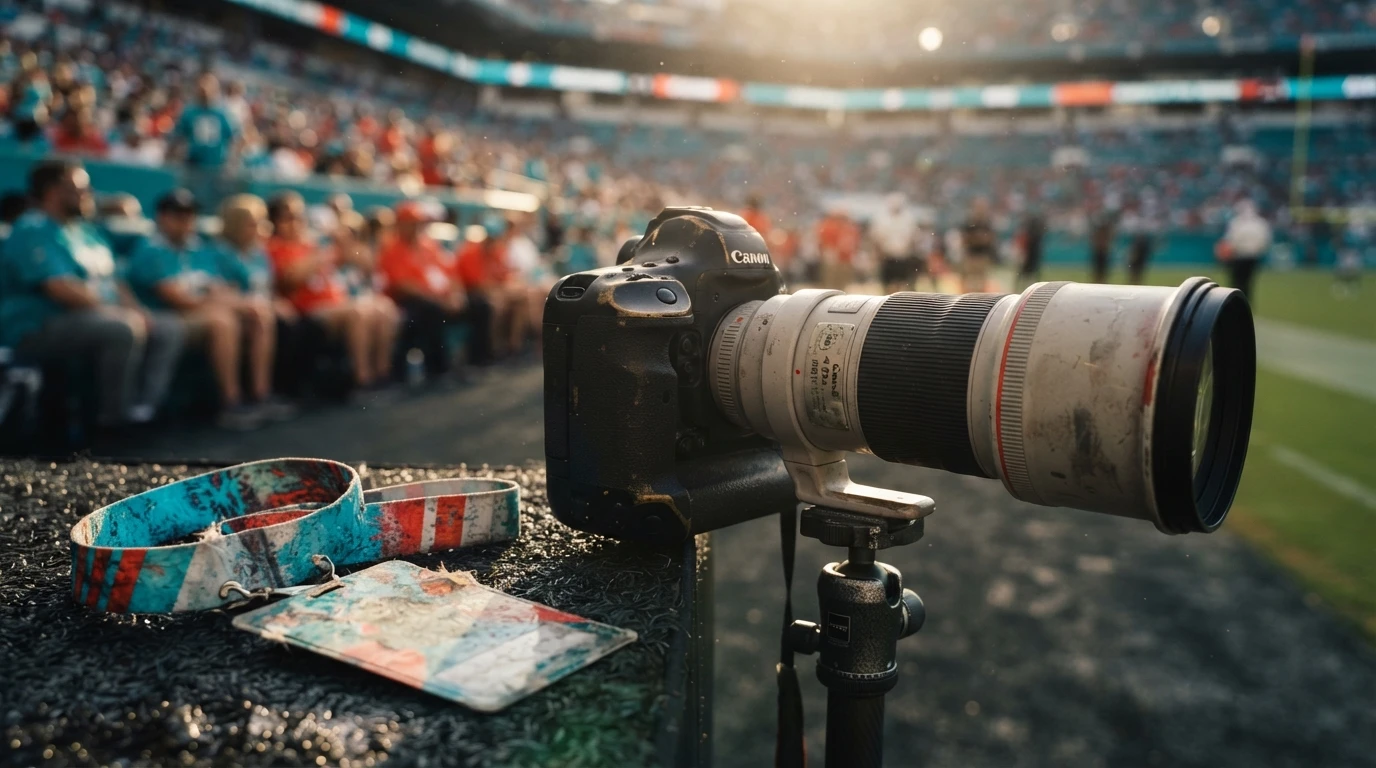
If you’re hiring northwest sports photography, you’re usually buying more than “someone with a long lens” – you’re buying sideline-ready access, fast-action capture in unpredictable Northwest light, and a consistent visual look that can carry from game day to campaign creative. This guide breaks down what’s typically included, how to evaluate skill for speed and brand identity, what rates look like, and which deliverables to request.
Key Takeaways
- Ask for a fast-action proof set (full sequences, not just highlight frames) to verify timing, focus reliability, and low-light performance before you book.
- Treat licensing as a line item: define usage (web, social, print, paid ads) and duration up front so “rates” do not turn into surprise fees.
- Request deliverables by channel (social, web, print) with specific crops, color treatment, and caption-ready metadata so your team can publish the same day.
Table of Contents
- What Does “northwest sports photography” Typically Include?
- How Do You Choose a Photographer for Fast Action and Brand Identity?
- What Does a Shoot Cost in the Northwest, and What Changes Pricing?
- What Deliverables Should You Request for Social, Web, and Print?
- Usage Rights, Turnaround Times, and Captions: The “Boring” Details That Make the Work Usable
- A Practical Outreach Checklist (So Your Quote Comes Back Accurate)
- Frequently Asked Questions
What Does “northwest sports photography” Typically Include?
northwest sports photography typically includes pre-event planning, on-site action coverage (often in rain, low-light gyms, or mixed lighting), a curated edit with consistent color and contrast, and delivery sized for the channels you actually publish on. The best providers also build a repeatable “team look” so your season doesn’t feel like ten different photographers shot it.
For Pacific Northwest brands and athletic departments, the real work starts before the shutter: credentialing, field-of-play rules, shot list priorities, and understanding the moments that matter for your sport (the peak of contact, the ball-on-string moment, the reaction after the whistle). That’s sports photography as a production discipline, not a hobby.
A typical coverage scope looks like this:
If you want the cinematic side of it (the kind of work that feels like a documentary still frame), that’s where a producer’s eye shows up: controlled contrast, intentional framing, and sequences that can be cut into a narrative. Our platform lives in that lane: stunning golf and documentary-style content designed to elevate brand identity, with capture plus editing, captioning, and design concepts that support content-to-commerce. You can see how we package that thinking inside the Avello Brand Company SERVICES.
How Do You Choose a Photographer for Fast Action and Brand Identity?
Sports photography hiring should be based on proof of timing, focus consistency, and taste under pressure, plus an ability to match your brand’s visual identity across a season. A beautiful portfolio is not enough if it’s built on a handful of lucky frames.
Start by asking for a full gallery from a single event, not just an Instagram carousel. In a full set, you can see whether the photographer consistently hits peak action, keeps faces sharp, and maintains usable skin tones under ugly lighting.
Fast Shutter Speed for Sports Photography: What “Fast Enough” Really Means
Fast shutter speed for sports photography is the baseline for freezing action, but “fast enough” changes by sport and by the look you want. For most field and court sports, photographers commonly live around 1/1000s to freeze movement, then adjust based on available light and whether they want motion in hands, ball, or background. That’s not a style opinion, it’s physics.
The tradeoff is exposure. In a dark gym, a photographer has to balance shutter speed with aperture and ISO, and still deliver files that can be cleaned up without turning into noisy mush. If you want a credible reference point, Nikon’s own guidance on action capture discusses using faster shutter speeds to freeze motion and adjusting ISO accordingly in low light: see Nikon’s sports photography tips.
When you’re evaluating a shooter, ask what they do when the light collapses. Do they know when to accept a little motion blur for atmosphere, and when to lock down a frozen frame because the sponsor needs a crisp hero image?
DSLR Camera for Sports Photography vs Mirrorless Camera for Sports Photography
A dslr camera for sports photography can still be excellent, but a mirrorless camera for sports photography often wins on subject-tracking autofocus and blackout-free bursts, which matters when you’re following a player through traffic. The camera body matters less than the operator’s ability to configure it: AF modes, back-button focus, burst discipline, and anticipating action so the camera is already where the moment lands.
If your internal team is asking “what camera is good for sports photography,” the honest answer is: the one that can lock focus on a moving subject reliably, sustain bursts without choking, and deliver clean files at higher ISO in your actual venues. You can sanity-check camera capability conversations against a neutral benchmark like DPReview’s camera and lens reviews, which consistently tests autofocus behavior, burst performance, and image quality.
Lenses for Sports Photography: The Glass Tells the Truth
Lenses for sports photography are where commitment shows up, because good glass is what buys you reach, subject separation, and autofocus speed. If you’re comparing systems, you’ll see people search for best lenses for sports photography: canon or best lenses for sports photography nikon because the practical short list is similar across brands: fast telephoto zooms, fast primes, and a plan for low light.
For Northwest conditions, a serious photographer usually arrives with weather-resilient gear, a monopod, and at least two focal length options so they can cover tight action and wider storytelling without missing sequences during lens swaps.
What Does a Shoot Cost in the Northwest, and What Changes Pricing?
northwest sports photography pricing is driven by time on-site, access complexity, turnaround speed, licensing scope, and how much post-production is required to deliver a consistent, brand-ready look. Anyone quoting a flat number without asking about usage rights and deliverables is guessing.
Most buyers feel the pain in two places: they need premium content but do not have in-house editing, and they need a consistent visual identity across events instead of a different look every week. Those are production problems, not just “rates” problems.
Here’s how pricing usually behaves in the market, without pretending there’s one universal fee:
Licensing is the most common surprise. If you plan to use images for paid campaigns, out-of-home, or sponsor co-marketing, say that up front. It changes the value of the work and the risk profile, and it should be written clearly so your team can publish without second-guessing.
For a reference on why licensing is a real business term and not a “nice-to-have,” the American Society of Media Photographers (ASMP) has long-standing education around commercial photography licensing and usage models: see ASMP’s licensing resources.
What Deliverables Should You Request for Social, Web, and Print?
Sports photography deliverables should be requested by channel, because each channel has different cropping realities, compression, and storytelling needs. If you ask for “all the photos,” you’ll get a pile of files and your marketing team will still struggle to publish consistently.
A clean request sounds like: “We need hero images for the website, verticals for stories and reels covers, horizontals for LinkedIn, and a print set for a program and sponsor deck, all with consistent color.”
Here’s a channel-based deliverables menu that actually works in the real world:
Editing expectations matter too. A lot of teams ask for “cinematic,” but what they actually mean is consistent contrast, controlled highlights, and color that flatters skin tones and uniforms without turning everything into neon. This is where sports photography Lightroom presets can help a photographer move faster, but presets are not a substitute for real color work under mixed lighting. If you want consistency, ask for a reference set (two or three past games) that matches the look you want, then require that the deliverables align to it.
Turnaround should be explicit. If you need same-night posts, ask for a small “rapid set” first (10-15 images), then the full gallery later. That structure protects quality and keeps your channels alive.
If your broader goal is to build a content pipeline, not just cover one event, it helps to think like a creator: capture, edit, caption, publish, repeat. We’ve laid out that workflow in How to Become a Content Creator: A Real Blueprint, and it maps cleanly onto athletic departments trying to keep a season’s worth of storytelling coherent.
Usage Rights, Turnaround Times, and Captions: The “Boring” Details That Make the Work Usable
northwest sports photography becomes truly valuable when the admin details are handled with the same care as the images: usage rights that match your real distribution, turnaround times that match your publishing cadence, and captions that reduce the workload on your team.
Usage rights should define: media (web, social, print, paid ads), duration, territory, and whether sponsors and partner organizations can repost. Put it in writing. If you are a corporate brand sponsoring an event, clarify whether the event organizer can use the images too, and whether athletes can repost personal shots.
Turnaround times should be tied to your content calendar. If you publish live, ask for a first batch during halftime or immediately postgame. If you publish weekly recaps, you can prioritize deeper curation and cleaner color grading.
Captions sound minor until you are staring at 200 images at 11:30 pm. A photographer who delivers caption-ready basics (names, teams, location, date, sponsor tags where appropriate) saves real labor, and it reduces the risk of misidentifying an athlete. If you want a documentary feel, captions also become part of the story, not an afterthought.
For teams building a broader narrative arc, it helps to study how the best sports docs structure scenes and character moments, then translate that into still coverage priorities. Our running list of references in Netflix sports documentaries worth watching is a useful shortcut when you’re developing a season-long visual voice.
A Practical Outreach Checklist (So Your Quote Comes Back Accurate)
When you email a photographer, the goal is simple: give enough detail that the quote reflects reality, and you do not spend a week clarifying basics. Provide the sport, venue, date, access level, and what “success” looks like in deliverables and usage.
A short checklist you can paste into an inquiry:
- Event date, location, and schedule (warmups through postgame if needed).
- Access details (credentials, sideline rules, media area, any restrictions).
- Deliverables by channel (social, web, print) and turnaround needs.
- Usage rights (owned channels, sponsors, paid ads, duration, territory).
- Brand references (your current look, plus 2-3 examples you like).
If you’re trying to align visuals across multiple events, include a link to your current feed or media hub so the photographer can match the tone. If you need examples of how we present ongoing coverage as a cohesive body of work, browse the FEATURED MEDIA POSTS to see how a consistent edit and caption approach changes the perceived level of a brand.
Frequently Asked Questions
What is needed for sports photography?
You need reliable access, a camera and lens combination that can track motion, and the ability to deliver clean files under bad light. The non-negotiable is timing: anticipating peak action matters more than any single piece of gear.
What is a reasonable budget for videography?
It depends on whether you need simple capture or full production (planning, audio, editing, graphics, licensing). The fastest way to get an accurate number is to define deliverables, timeline, and usage rights before you request a quote.
What is the difference between videography and video production?
Videography usually means capturing footage with minimal pre-production, while video production includes planning, story structure, audio strategy, editing, and delivery formats. For brands, production is what makes content repeatable across campaigns.
What is cinematic style photography?
Cinematic style photography uses intentional light, contrast, composition, and color grading to create frames that feel like stills from a film. In sports, it often means controlled highlights, clean subject separation, and a consistent “world” across a full set.
If you’re building a Northwest-facing brand story and you want sports coverage that feels like a documentary stills unit, the next step is a clear scope: access, deliverables, and usage. When you’re ready to talk through a shoot or a season-long content plan, reach out through our Availability contact form and tell us what you’re trying to make the audience feel when they see the first frame.


Leave a Reply