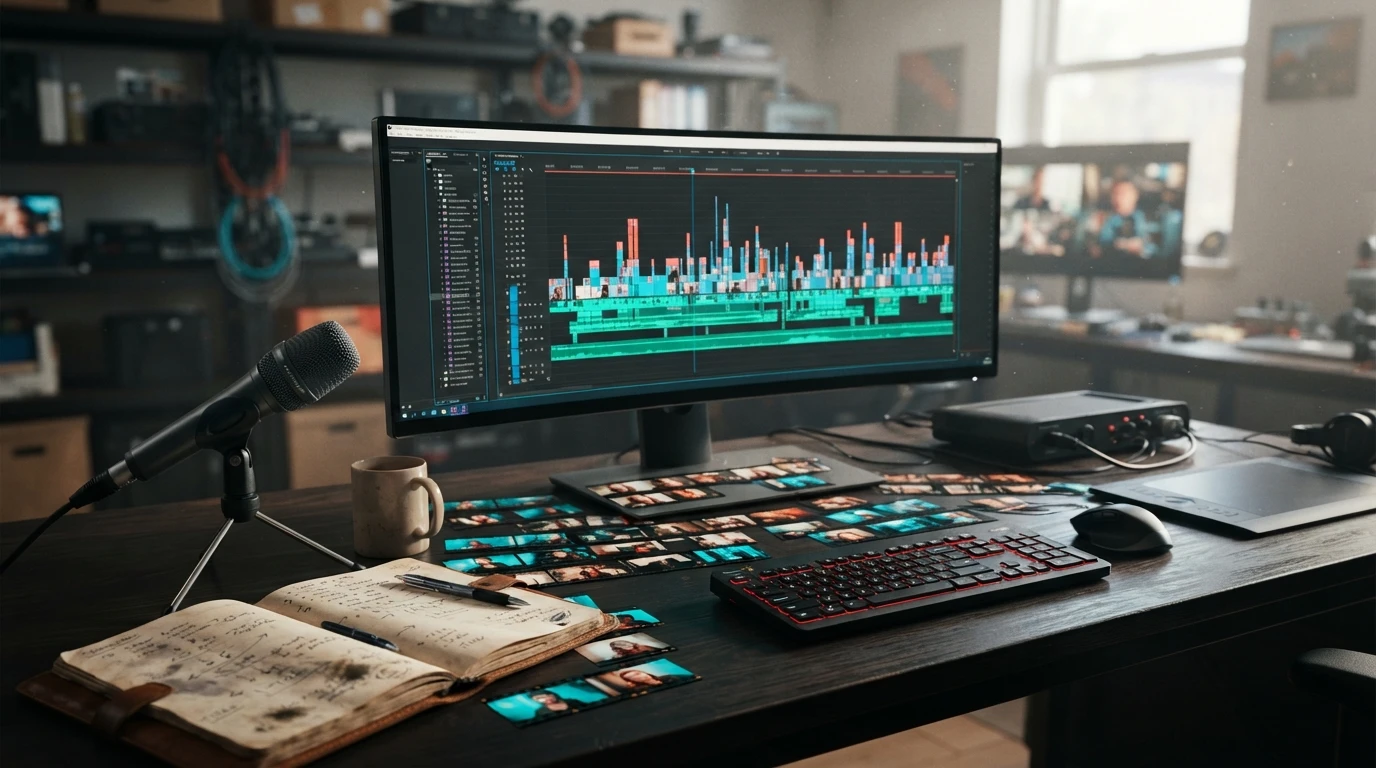
Sports documentaries work because they turn competition into character, and character into consequence, using real footage, real voices, and edit decisions that make you feel the pressure like it is happening now. This guide breaks down what the format is, the story structures that consistently land, how interviews and archival footage actually get stitched together, and how to pick good sports documentaries tonight.
Key Takeaways
- Judge a sports doc by **clarity of stakes**: you should know what can be won or lost within the first 10 minutes, even if the sport is unfamiliar.
- The strongest films use a repeatable structure: **setup, pressure, fracture, decision, consequence**, then a closing beat that re-frames the person, not the scoreboard.
- Great craft is invisible: interviews supply meaning, archival supplies proof, and verité supplies pulse, all unified by edit rhythm and sound design.
Table of Contents
- What Are sports documentaries, and Why Do They Work So Well?
- What Story Structures Do the Best sports documentaries Use?
- How Do Interviews, Archival Footage, and Verité Scenes Fit Together?
- What Should You Look For If You Want Good sports documentaries Tonight?
- Sports Photography and Camera Choices: Why Visual Language Changes the Doc
- Frequently Asked Questions
Avello Brand Company lives in cinematic sport and documentary-style storytelling, especially where golf’s lifestyle visuals meet narrative stakes, so we obsess over the same ingredients viewers feel in their gut: pacing, sound design, scene selection, and the moments you choose to hold on screen.
What Are sports documentaries, and Why Do They Work So Well?
Sports documentaries are nonfiction films or series that use the raw material of sport (games, training, rivalry, injury, money, identity, legacy) to tell a narrative with a beginning, middle, and end. The reason they hit so reliably is simple: sport manufactures stakes in public, on a clock, with consequences that are easy to understand even when the rules are not.
A great sports doc also solves a problem most scripted drama struggles with: authentic pressure. The camera captures micro-signals you cannot fake for long, like the way an athlete breathes between reps, how a coach fills silence, or how someone’s posture changes when the season tilts. When viewers say “I felt like I was there,” they are reacting to verité texture plus editorial restraint, not just highlight reels.
There is also a built-in moral engine. Winning is never only winning. It is belonging, or escape, or proof, or grief management. That is why endurance stories often feel meditative and lonely, why team-sport stories feel political and communal, and why golf documentaries can feel like a private argument filmed in public, because the opponent is frequently your own decision-making.
If you want a fast taste of how different tones play out across the category, our roundup of Netflix sports documentaries worth watching shows how the platform’s best titles vary in pacing, intimacy, and narrative voice depending on the sport and the era.
What Story Structures Do the Best sports documentaries Use?
What story structures do the best sports documentaries use? The ones that hold attention tend to follow a narrative arc that is familiar to fiction, but disciplined by reality: you cannot invent scenes, so you must choose the right true ones and order them to reveal meaning.
The most dependable structure is a pressure curve built around a central question. Can they come back? Can they stay clean? Can they hold the locker room? Can they live with the decision they already made? The sport is the arena, but the question is the engine.
Here is a practical map you can use to analyze almost any great film or episodic series:
Episodic series often repeat this cycle per episode, then stack a larger season-long arc on top. Feature films usually compress the beats and rely more heavily on a single spine: one season, one tournament, one comeback, one collapse.
A note that matters for marketers and filmmakers: the strongest structure is rarely “chronological.” Chronology is a filing system. Story is meaning. The edit earns its power when it withholds just enough context to make you lean in, then pays you back with a reveal that changes how you interpret what you already saw.
If you want to see how a narrative spine can be built around a single round, a single venue, and a single personal standard, the Feature Birthday Edition of Breaking 80 is a useful reference point for golf’s particular mix of lifestyle calm and internal heat.
How Do Interviews, Archival Footage, and Verité Scenes Fit Together?
How do interviews, archival footage, and verité scenes fit together? In a finished documentary, they should function like three different instruments playing the same song: interviews deliver interpretation, archival delivers evidence, and verité delivers immediacy.
Interviews are not there to recap what we can see. The best interview bites do one of three jobs: they confess something the subject would not say on the field, they contradict the public myth, or they name the real stakes. When an interview becomes play-by-play, the film goes flat. You can feel it.
Archival footage is the truth serum, and it comes with real constraints. Rights, clearances, and usage terms shape what you can show, how long you can show it, and where you can distribute it. If you are producing professionally, the U.S. Copyright Office overview of fair use is worth reading, because “it’s documentary” is not a clearance strategy. A film that looks expensive often is expensive, not because of cameras, but because archival is a business.
Verité scenes are the heartbeat. They are where the viewer stops listening and starts experiencing. The craft here is patience: you shoot longer than you think you need, you protect quiet moments, you capture transitions (walking, waiting, stretching, packing), and you let the environment speak.
The edit is where these elements lock. A reliable pattern is: verité pulls you into a moment, archival proves how we got here, interview reframes what it means, then verité returns to show the cost in real time. Sound design is the glue. Crowd tone, room tone, spikes of breath, the click of a cleat on concrete, the dull thump of range balls: these are emotional cues, and when they are missing, even beautiful footage can feel distant.
For a concrete example of documentary-style sequencing and pacing in a brand-forward format, Sports Column Video shows how narration, scene coverage, and editorial rhythm can be shaped into a watchable story unit rather than a highlight dump.
What Should You Look For If You Want Good sports documentaries Tonight?
Good sports documentaries are the ones that respect your time: they establish stakes early, they avoid filler interviews, and they use real scenes as turning points rather than wallpaper. If you are choosing something to watch tonight, you can make a surprisingly accurate call within the first few minutes by checking for craft signals.
Start with stakes clarity. You should understand what matters and why. If the first act is all montage with no consequence, the film is probably leaning on the sport’s popularity instead of story.
Then look at scene density. Great docs have scenes that change information: selection meetings, medical consults, family conversations, contract calls, late-night travel, pre-game silence. If everything is retrospective talking heads, you are watching commentary, not documentary.
Listen for sound discipline. When a film uses music to replace emotion in every beat, it tends to feel manipulative. When it uses quiet and natural sound to let moments land, you lean forward. That is not a taste issue. It is a craft tell.
Finally, check whether the film has a point of view without preaching. The best work makes an argument through choices: what it shows, what it omits, and whose voice it trusts. For series browsing specifically, this is where “best sports documentaries on Netflix” lists help, because you can quickly filter by tone: scandal-driven, character-driven, history-driven, or access-driven. Netflix also publishes its own perspective on what it commissions and why, but the more practical move is to evaluate each title on structure and scene access, not hype.
If you want a quick reference list to narrow your options, start with Netflix sports documentaries worth watching, then pick based on what you actually want to feel: adrenaline, nostalgia, outrage, inspiration, or the quieter satisfaction of watching someone pursue a standard no one else can see.
Sports Photography and Camera Choices: Why Visual Language Changes the Doc
Sports photography matters in sports documentaries because the visual language you build in the field determines what the edit can emphasize later: speed, isolation, violence, grace, repetition, or control. Even if you are not the shooter, understanding capture choices helps you evaluate why one film feels immersive and another feels like broadcast leftovers.
What is needed for sports photography in a documentary context usually comes down to shutter speed, lens reach, and reliability under bad light. The International Olympic Committee’s Olympic Studies Centre is a useful place to explore how sport is archived and presented historically, but on the ground, your choices are practical: can you hold focus, can you stabilize, can you keep rolling when things get chaotic?
If you are asking what camera is best for sports photography, the honest answer is “the one that locks focus consistently and gives you clean files at higher ISO,” because missed focus is not an aesthetic. It is a lost moment. New creators often chase bodies and ignore glass, but the best lens for sports photography is frequently the difference between a frame that feels like you were inside the play and a frame that feels like you were watching from the parking lot. Canon shooters asking for a good lens for sports photography Canon are usually trying to solve the same problem: reach plus aperture plus autofocus performance.
Golf is its own visual problem. The action is small, the emotion is internal, and the best moments happen between shots, which is why golf documentaries lean on longer lenses for compression, slower pacing, and more environmental storytelling. Team sports often do the opposite: wider coverage, more bodies, more collision, more cut frequency. Endurance sits in the middle, where repetition becomes the point and the landscape becomes character.
For anyone building a portfolio, the fastest way to grow is to study finished work, then shoot with intent. Our FEATURED MEDIA POSTS are built around that mindset: capture like a storyteller, edit like you are protecting a feeling, and publish like you want the work to live longer than a weekend.
Frequently Asked Questions
What are some of the best sports documentaries available right now?
The best picks tend to be the ones with real access and a clear narrative spine, whether they are scandal-driven, history-driven, or purely character-driven. Use stakes clarity, scene density, and sound discipline as your filter, then choose by tone.
What is the best sports documentary of all time?
There is no single consensus because “best” depends on what you value: cultural impact, intimacy, investigative reporting, or pure cinematic craft. A strong candidate is usually one that still works even if you do not care about the sport, because the human question is that compelling.
What is the best new sports documentary?
The best new title is typically the one that offers either fresh access (behind closed doors) or a fresh angle (a re-framing of a known story). Check whether it is built on scenes that change the story, not just interviews that summarize it.
What are the best reviewed golf documentaries?
Golf docs that review well tend to balance calm visuals with sharp internal stakes, because the drama is often psychological rather than physical. Look for films that stay with the player between shots and let silence do some of the work.
If you are building a brand, a channel, or a film slate, the real advantage comes from knowing what you are watching and why it works, then translating that craft into your own capture and edit decisions. When you are ready to shape cinematic, documentary-style sport stories that feel elevated and intentional, reach out to our team via Availability.


Leave a Reply